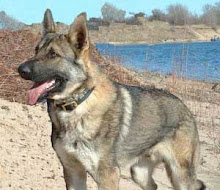
For both the individual and family owner the German Shepherd puppy is an excellent pet since they are athletic, energetic and bonding. The breed is also trained for search and rescue roles as well as police dogs. When you are choosing between German Shepherd puppies for sale you should consider the health and breed standards. Set up an initial meeting with your puppy once you know which one you are considering buying. Carefully observe how the puppy reacts to your voice and touch, make sure they are eager to make friends and affectionate.
It is important to train your puppy early in life or at the very least find one with a good temperament since they can become aggressive later in life. Any methods the former owners have used in socializing are important to the early socializing of the dog. You want to start the puppy out early with interacting with other dogs and humans.
If you are buying from a breeder you next want to ask to see both of the parents of the puppy you are considering. You will want to carefully observe how the parents react to you as a stranger, as they shouldn't have any signs of unwanted aggression. The temperament of the parents will be present in the litter. You also want to make sure the parents move easily and unencumbered for health reasons. Ask to see the Orthopedic Foundation for Animals certification for the puppy's parents.
Hip dysphasia is common in German Shepherds and it is a genetic condition so it can be passed on to the litters. When you are considering German Shepherd puppies for sale it is always important to consider the rating that the Orthopedic Foundation for Animals gives to all registered canines as a result of X-rays showing the dogs bone structure. Dogs who are prone to hip dysphasia shouldn't be bred and if the owners can't give you Orthopedic Foundation for Animals certification for their dogs you should consider purchasing your puppies from someone else.
Next carefully look over the puppy you are considering. The eyes should be clear and alert and the gums should be pink and healthy. There should be no foreign matter in the ears. Without being overly energetic the puppy should be playful. When considering German Shepherd puppies for sale you should carefully consider the puppy's lineage. An American Kennel Club puppy from a breeder will have family charts that show not only the puppy's parents but also the ancestors of the puppy for several generations on both sides of the family. A good breeder will be happy to show you this detailed family tree and even provide you a copy for your records.
After you have chosen and purchased you German Shepherd puppy you should have it evaluated by a veterinarian right away, they will need to be de-wormed and get all their shots. To socialize your puppy with other dogs and human beings you should take them on walks, set up play dates with dogs or friends and take them with you into pet stores when you shop if it is allowed.
When you are looking forGerman Shepherd puppies you want to take several steps in order to find the right one. After getting a new puppy it is important to know proper German Shepherd puppy care.
Monday, June 16, 2008

Monday, June 9, 2008
Good German Shepherd Breeders
Pet buyers have many options today. Those in the market for a purebred German Shepherd need to research the specifics before buying. This article will cover the history of the German Shepherd, characteristics of the German shepherd, where to buy German Shepherds, and how to avoid illicit breeders and sellers of German Shepherds. Additionally, buyers should know how to care for a purebred German Shepherd and be prepared for this well in advance of making a purchase.
The history of the German Shepherd dog begins fairly recently compared to other breeds. Though various sheep dogs existed in Germany, the first German Shepherd was classified as such in 1899. A German cavalry captain, Max von Stephanitz, noticed a fine example of a sheep dog at a dog show. That dog, Hektor, was renamed Horand von Grafath, and he was the first German Shepherd. Stephanitz founded The German Shepherd Dog Club of Germany and became the first German Shepherd breeder in history.
The German Shepherd dog has a large body and is wolfish in appearance. Stephanitz initially inbred the line to retain its lupine beauty, intelligence and utility. Unfortunately, inbreeding also caused genetic defects. German Shepherds are highly prone to hip dysplasia and other skeletal disorders. It is recommended that any potential buyer ask for a warranty from the breeder that their dog has been evaluated and cleared for hip dysplasia.
There are many places where a buyer can acquire a purebred German Shepherd. These include breeders, brokers, the Internet, the newspaper (private owners), pet stores, shelters and rescue centers. Simply put, the best place to buy a purebred German Shepherd is from a certified, ethical German Shepherd breeder. These breeders have their own kennels and often work in tandem with rescue centers or house rescues within their own kennels. All other sellers of German Shepherds cannot provide a full history and put buyers at risk of purchasing dogs with health and behavioral problems as well an uncertain ancestry.
A reputable German Shepherd breeder will provide registration papers for each Shepherd they sell, preferably certified by the American Kennel Club. German Shepherd breeders will also provide medical records on demand and offer a warranty or guarantee regarding certain health conditions like hip dysplasia. A good German Shepherd breeder may also ask the buyer to sign a contract stating that he or she will have the dog spayed/neutered or evaluated for other medical conditions within specific time frames.
Good breeders do not sell their dogs to pet stores. Breeders care what happens to their breed and want to know information about the potential homes puppies are going to. Though pet stores display adorable puppies to consumers, the background that these puppies come from is not so pretty. Puppies are born and shipped in cages. Like any other merchandise, they are stored and then sold. Unsold puppies are destroyed. The parents of these puppies are bred twice a year in cages with little to no socialization. Every purchase from a pet store funds the perpetuation of this cycle. This is why it is important that buyers purchase only from ethical German Shepherd breeders and rescue centers.
When finding German Shepherd information and researching places to buy a German Shepherd, the focus should be on finding ethical German Shepherd breeders. This article provides German Shepherd information and cites ways to obtain German Shepherds, whether through a pet shop, broker or German Shepherd breeder.
The history of the German Shepherd dog begins fairly recently compared to other breeds. Though various sheep dogs existed in Germany, the first German Shepherd was classified as such in 1899. A German cavalry captain, Max von Stephanitz, noticed a fine example of a sheep dog at a dog show. That dog, Hektor, was renamed Horand von Grafath, and he was the first German Shepherd. Stephanitz founded The German Shepherd Dog Club of Germany and became the first German Shepherd breeder in history.
The German Shepherd dog has a large body and is wolfish in appearance. Stephanitz initially inbred the line to retain its lupine beauty, intelligence and utility. Unfortunately, inbreeding also caused genetic defects. German Shepherds are highly prone to hip dysplasia and other skeletal disorders. It is recommended that any potential buyer ask for a warranty from the breeder that their dog has been evaluated and cleared for hip dysplasia.
There are many places where a buyer can acquire a purebred German Shepherd. These include breeders, brokers, the Internet, the newspaper (private owners), pet stores, shelters and rescue centers. Simply put, the best place to buy a purebred German Shepherd is from a certified, ethical German Shepherd breeder. These breeders have their own kennels and often work in tandem with rescue centers or house rescues within their own kennels. All other sellers of German Shepherds cannot provide a full history and put buyers at risk of purchasing dogs with health and behavioral problems as well an uncertain ancestry.
A reputable German Shepherd breeder will provide registration papers for each Shepherd they sell, preferably certified by the American Kennel Club. German Shepherd breeders will also provide medical records on demand and offer a warranty or guarantee regarding certain health conditions like hip dysplasia. A good German Shepherd breeder may also ask the buyer to sign a contract stating that he or she will have the dog spayed/neutered or evaluated for other medical conditions within specific time frames.
Good breeders do not sell their dogs to pet stores. Breeders care what happens to their breed and want to know information about the potential homes puppies are going to. Though pet stores display adorable puppies to consumers, the background that these puppies come from is not so pretty. Puppies are born and shipped in cages. Like any other merchandise, they are stored and then sold. Unsold puppies are destroyed. The parents of these puppies are bred twice a year in cages with little to no socialization. Every purchase from a pet store funds the perpetuation of this cycle. This is why it is important that buyers purchase only from ethical German Shepherd breeders and rescue centers.
When finding German Shepherd information and researching places to buy a German Shepherd, the focus should be on finding ethical German Shepherd breeders. This article provides German Shepherd information and cites ways to obtain German Shepherds, whether through a pet shop, broker or German Shepherd breeder.
Wednesday, May 28, 2008
Buying From German Shepherd Breeders
The German Shepherd dog breed was registered in the herding group by the American Kennel Club (AKC) in 1911. Though German Shepherds are descended from sheep herding dogs, they perform many other functions today. German Shepherds are one of the most utilitarian dog breeds in the world.
The first German Shepherd was named Hektor. A dog fancier and German cavalry captain named Max von Stephanitz saw Hektor at a dog show and found him to be an excellent example of a German sheepdog. Stephanitz, who would be the first of many German Shepherd breeders, renamed Hektor as Horand von Grafath and founded the German Shepherd Dog Club in 1899 with the intention of maintaining the inherent traits of the first German Shepherd.
German Shepherds have been bred to retain both their intelligence and utility. Stephanitz also bred the Shepherd to retain its wolf-like appearance. The breed has many strengths including fierce loyalty, trainability, and ability to multi-task. German Shepherd breeders may specialize in training this breed in any of the above areas.
It is very important that German Shepherds begin life in an environment in which they receive stimulation, attention, discipline and training. Because of their very nature, great care goes into raising German Shepherds to be smart and socialized working dogs. Reputable German Shepherd breeders raise dogs in their own kennels and encourage buyers to visit and get to know both the purebred puppy they are buying and its mother. Good breeders specialize in only one or two breeds and are affiliated with the American Kennel Club and dog rescue centers. German Shepherd breeders are involved in training and competition programs with their Shepherds.
German Shepherd breeders will provide not only registration papers and certification of ancestry (preferably American Kennel Club certified) but also medical records showing evidence of health and immunization. These documents are necessary to determine whether a buyer is getting a purebred, healthy German Shepherd. There are many illicit breeders in the market to make money with little regard for the dogs they are breeding. These bad breeders often are puppy brokers as well, meaning they sell dogs that they may have never even seen. Worse are breeders who run puppy mills, which churn out litters but in poor conditions with little socialization.
Sure-fire signs of bad German Shepherd breeders include the fact that they only sell puppies over the Internet, they have no physical kennel of their own or only broker puppies, they ask for a non-refundable down payment before the litter is born, they do not plan to keep one of the litter, They claim to have a kennel but will not allow a buyer to visit and they have many dogs for sale at one time. Bad breeders also cannot provide adequate registration or certification paperwork, cannot provide medical record information or refer you to only their" veterinarian, and they don't ask the buyer questions about their household. They do not care where their puppies are going.
Good German Shepherd breeders have the opposite qualities of the above. Additionally, they are affiliated with other agencies and rescue centers that help promote and care for the breed. Most importantly, good breeders love the breed they raise!
It is important to know how to locate reputable German Shepherd breeders. This article provides German Shepherd information and gives a history of German Shepherd breeders.
The first German Shepherd was named Hektor. A dog fancier and German cavalry captain named Max von Stephanitz saw Hektor at a dog show and found him to be an excellent example of a German sheepdog. Stephanitz, who would be the first of many German Shepherd breeders, renamed Hektor as Horand von Grafath and founded the German Shepherd Dog Club in 1899 with the intention of maintaining the inherent traits of the first German Shepherd.
German Shepherds have been bred to retain both their intelligence and utility. Stephanitz also bred the Shepherd to retain its wolf-like appearance. The breed has many strengths including fierce loyalty, trainability, and ability to multi-task. German Shepherd breeders may specialize in training this breed in any of the above areas.
It is very important that German Shepherds begin life in an environment in which they receive stimulation, attention, discipline and training. Because of their very nature, great care goes into raising German Shepherds to be smart and socialized working dogs. Reputable German Shepherd breeders raise dogs in their own kennels and encourage buyers to visit and get to know both the purebred puppy they are buying and its mother. Good breeders specialize in only one or two breeds and are affiliated with the American Kennel Club and dog rescue centers. German Shepherd breeders are involved in training and competition programs with their Shepherds.
German Shepherd breeders will provide not only registration papers and certification of ancestry (preferably American Kennel Club certified) but also medical records showing evidence of health and immunization. These documents are necessary to determine whether a buyer is getting a purebred, healthy German Shepherd. There are many illicit breeders in the market to make money with little regard for the dogs they are breeding. These bad breeders often are puppy brokers as well, meaning they sell dogs that they may have never even seen. Worse are breeders who run puppy mills, which churn out litters but in poor conditions with little socialization.
Sure-fire signs of bad German Shepherd breeders include the fact that they only sell puppies over the Internet, they have no physical kennel of their own or only broker puppies, they ask for a non-refundable down payment before the litter is born, they do not plan to keep one of the litter, They claim to have a kennel but will not allow a buyer to visit and they have many dogs for sale at one time. Bad breeders also cannot provide adequate registration or certification paperwork, cannot provide medical record information or refer you to only their" veterinarian, and they don't ask the buyer questions about their household. They do not care where their puppies are going.
Good German Shepherd breeders have the opposite qualities of the above. Additionally, they are affiliated with other agencies and rescue centers that help promote and care for the breed. Most importantly, good breeders love the breed they raise!
It is important to know how to locate reputable German Shepherd breeders. This article provides German Shepherd information and gives a history of German Shepherd breeders.
Monday, May 19, 2008
German Shepherd Information
The first German Shepherd was named Hektor. Hektor was thought to be an excellent example of a sheep herding dog and in 1899 a German named Rittmeister Max von Stephanitz renamed Hektor, Horand von Grafath, and registered him as the first German Shepherd in the German Shepherd Dog Club of Germany. Von Stephanitz brought the breed back into popularity so much that approximately 48,000 German Shepherds were "enlisted" in World War I.
The German Shepherd breed is registered in the herding group by the American Kennel Club because of its skill in sheep herding. However, German Shepherd dogs are used for many other purposes today. They are the most common dogs used by police and military for protection and tracking and by the visually impaired as guides. German shepherds are highly intelligent, fiercely loyal, and are at their best when put to work. They can be trained to do multiple tasks. Of course, German Shepherds are also excellent family dogs especially for protection and home security. A German Shepherd breeder may specialize in training this breed in any of the above areas.
A good German Shepherd breeder will be able to provide you with documentation of the dog's pedigree and medical history. Because German Shepherds are prone to many skeletal disorders, especially of the hip, the breeder should also include a warranty or statement that the dog has been evaluated for these issues. Getting documentation is also a good way to make sure your Shepherd is purebred as well determining what accomplishments the dog has in his ancestry. Most German Shepherds are trained and certified in many areas and a pedigree will list these achievements.
Make sure you know how to properly care for your German Shepherd and ask advice from the breeder on diet, exercise, and general training. A reputable breeder should have his or her own kennel and your German Shepherd should have received daily socialization, exercise and grooming as well as good nutrition and exposure to other animals. Lastly, make sure you have a purpose for buying a German Shepherd. This intelligent, hard-working breed is happiest when its owner gives it daily tasks to complete.
Now that you know what to look for in a German Shepherd and a German Shepherd breeder, you are ready to find the perfect German Shepherd. There is an alternative to buying a purebred puppy from a breeder. Reputable breeders are usually affiliated with or run rescue centers. A German Shepherd rescue center houses Shepherds that have been abused, abandoned or neglected.
Unfortunately, some breeders over-breed Shepherds in what are called puppy mills. These mills churn out puppies with little regard for the health, happiness or socialization of the adult dogs. Due to this practice, many adult German Shepherds are in need of homes. Rescue centers foster and adopt out dogs by matching them with loving owners. This is an excellent way to obtain a trained, purebred German Shepherd at a reduced cost. It also gives the Shepherd a second chance at a good life. Consider a rescued German Shepherd when making your purchase. Rescue center staff can also refer you to reputable breeders if they do not have kennels for this purpose.
Responsible German Shepherd breeders only sell authentic German Shepherd dogs. German Shepherd information is provided to assist the German Shepherd breeder and buyer.
The German Shepherd breed is registered in the herding group by the American Kennel Club because of its skill in sheep herding. However, German Shepherd dogs are used for many other purposes today. They are the most common dogs used by police and military for protection and tracking and by the visually impaired as guides. German shepherds are highly intelligent, fiercely loyal, and are at their best when put to work. They can be trained to do multiple tasks. Of course, German Shepherds are also excellent family dogs especially for protection and home security. A German Shepherd breeder may specialize in training this breed in any of the above areas.
A good German Shepherd breeder will be able to provide you with documentation of the dog's pedigree and medical history. Because German Shepherds are prone to many skeletal disorders, especially of the hip, the breeder should also include a warranty or statement that the dog has been evaluated for these issues. Getting documentation is also a good way to make sure your Shepherd is purebred as well determining what accomplishments the dog has in his ancestry. Most German Shepherds are trained and certified in many areas and a pedigree will list these achievements.
Make sure you know how to properly care for your German Shepherd and ask advice from the breeder on diet, exercise, and general training. A reputable breeder should have his or her own kennel and your German Shepherd should have received daily socialization, exercise and grooming as well as good nutrition and exposure to other animals. Lastly, make sure you have a purpose for buying a German Shepherd. This intelligent, hard-working breed is happiest when its owner gives it daily tasks to complete.
Now that you know what to look for in a German Shepherd and a German Shepherd breeder, you are ready to find the perfect German Shepherd. There is an alternative to buying a purebred puppy from a breeder. Reputable breeders are usually affiliated with or run rescue centers. A German Shepherd rescue center houses Shepherds that have been abused, abandoned or neglected.
Unfortunately, some breeders over-breed Shepherds in what are called puppy mills. These mills churn out puppies with little regard for the health, happiness or socialization of the adult dogs. Due to this practice, many adult German Shepherds are in need of homes. Rescue centers foster and adopt out dogs by matching them with loving owners. This is an excellent way to obtain a trained, purebred German Shepherd at a reduced cost. It also gives the Shepherd a second chance at a good life. Consider a rescued German Shepherd when making your purchase. Rescue center staff can also refer you to reputable breeders if they do not have kennels for this purpose.
Responsible German Shepherd breeders only sell authentic German Shepherd dogs. German Shepherd information is provided to assist the German Shepherd breeder and buyer.
Sunday, May 11, 2008
Things To Know About Your German Shepherd Breeder
You and your family have made your decision and plan to get a German Shepherd as the new family pet. Now that you have made that decision the time has come for an even more important decision and that is choosing the right German Shepherd breeder for you and your family. This part of the process is extremely important so take it very seriously and make sure you do a thorough check of all the available breeders before you settle on just one.
You will be talking to a lot of breeders and this is necessary because any reputable breeder will expect you to talk to a lot of breeders. You are not going to hurt a good breeder's feelings by exploring options. Don't just settle for the first breeder you talk to, branch out and talk to more. You will be needing to feel comfortable talking with your breeder for many years to come so make sure you feel like you can really talk to the breeder you choose.
Ask your German Shepherd breeder what breeder registry they are listed with so you can get an idea of what breeding standards they subscribe to. The main registry in the United States is the American Kennel Club but there are others and they are just as reputable. If your breeder does not belong to a registry then ask them why and ask them about the standards they use for breeding. This information can be very important to you when making a decision.
A reputable breeder will give you a large amount of detailed information about your new dog when you leave with it, along with a sample of their food so you know what kind of food to feed them. A good breeder will take the time to answer your questions and make sure that you have all the information you need. If the breeder you are talking to does not plan on supplying this type of assistance then find a different breeder.
In some cases insurance companies see opportunity with the more reputable German Shepherd breeders and they give these breeders free pet insurance policies to give to new pup owners. The policies are for six weeks and should help cover some of the cost of your first vet appointment. If you like the policy the insurance company hopes you renew it, the German Shepherd breeder will just be happy to offer you a free policy that helps you with those vet bills, which even for a new puppy can be outrageous.
If you and your breeder do not get along then you chose the wrong breeder. That is why it is so important to spend time talking to a lot of breeders until you find one that you feel like you really click with and can talk to. A good breeder will be in your dog's life, and your family's life, for many years to come so make sure you are comfortable with the breeder you choose and take your time so that you make the right choice in this important decision.
You will find important information regarding German Shepherd breeders in this article. There is some very useful and important German Shepherd information in this article.
You will be talking to a lot of breeders and this is necessary because any reputable breeder will expect you to talk to a lot of breeders. You are not going to hurt a good breeder's feelings by exploring options. Don't just settle for the first breeder you talk to, branch out and talk to more. You will be needing to feel comfortable talking with your breeder for many years to come so make sure you feel like you can really talk to the breeder you choose.
Ask your German Shepherd breeder what breeder registry they are listed with so you can get an idea of what breeding standards they subscribe to. The main registry in the United States is the American Kennel Club but there are others and they are just as reputable. If your breeder does not belong to a registry then ask them why and ask them about the standards they use for breeding. This information can be very important to you when making a decision.
A reputable breeder will give you a large amount of detailed information about your new dog when you leave with it, along with a sample of their food so you know what kind of food to feed them. A good breeder will take the time to answer your questions and make sure that you have all the information you need. If the breeder you are talking to does not plan on supplying this type of assistance then find a different breeder.
In some cases insurance companies see opportunity with the more reputable German Shepherd breeders and they give these breeders free pet insurance policies to give to new pup owners. The policies are for six weeks and should help cover some of the cost of your first vet appointment. If you like the policy the insurance company hopes you renew it, the German Shepherd breeder will just be happy to offer you a free policy that helps you with those vet bills, which even for a new puppy can be outrageous.
If you and your breeder do not get along then you chose the wrong breeder. That is why it is so important to spend time talking to a lot of breeders until you find one that you feel like you really click with and can talk to. A good breeder will be in your dog's life, and your family's life, for many years to come so make sure you are comfortable with the breeder you choose and take your time so that you make the right choice in this important decision.
You will find important information regarding German Shepherd breeders in this article. There is some very useful and important German Shepherd information in this article.
Sunday, May 4, 2008
A Useful Way To Find German Shepherd Breeders
The family has decided that it is time to get that German Shepherd pup you have all been talking about for a while now so all you need to do is contact the German Shepherd breeder of your choice and get your dog. What? You have no idea how to get in touch with a good German Shepherd breeder? Well that is no problem. There are many steps you should follow to find a breeder that you will very happy to work with. Some of the methods are obvious while others are not so obvious but you should try them all to find the right breeder for you.
As simple as this may sound you can start your search by looking in the phone book. The only thing you need to keep in mind is that contrary to popular belief not all reputable business people advertise in the phone book. Some of the better breeders only do business with referrals from people they know and that may be better than anyone you can find in the phone book. But it is worth a try.
You will never get better pet advice than the advice you get from your vet. If you already have pets and go to regular vet then be sure to ask them to recommend a good German Shepherd breeder that you can talk to. If this will be your first pet then the best time to find a vet is while you are looking for a breeder. This way your vet can refer you to the breeders that they do business with, trust and refer you to. It is a large network of referrals and the only way into that network is to keep customers happy so you should be able to get a great recommendation from your vet.
You will also want to see what the national breeder registries have listed for breeders in your area. The national registries like the American Kennel Club have their codes of breeding that their member breeders use as their breed guidelines and standards. So not only will you find the names of breeders that care enough about their business to adhere to a national standard but you can also see what that standard is.
The Internet is a great resource all around and sometimes even the most reputable of German Shepherd breeders do not list themselves with registries. They may, however, have a website for you to look through. So the Internet is yet another source where you can do your German Shepherd breeder research. The Internet is full of a lot of very useful information that can help you decide if a breeder is right for you or not. You can also use the Internet to see the list of all of the breeders in your area regardless of whether or not they are listed with a registry. It is a great tool to use.
Using just one source to find your German Shepherd breeder is not a great way to go about finding the right one. You need to use a combination of resources to help you find the breeders that you will want to talk to. Remember to take your time and make the right decisions, as the breeder you choose will be the breeder you are with for many years to come.
There is helpful information about finding German Shepherd breeders in this article. You can use this article as a resource when you need German Shepherd information.
As simple as this may sound you can start your search by looking in the phone book. The only thing you need to keep in mind is that contrary to popular belief not all reputable business people advertise in the phone book. Some of the better breeders only do business with referrals from people they know and that may be better than anyone you can find in the phone book. But it is worth a try.
You will never get better pet advice than the advice you get from your vet. If you already have pets and go to regular vet then be sure to ask them to recommend a good German Shepherd breeder that you can talk to. If this will be your first pet then the best time to find a vet is while you are looking for a breeder. This way your vet can refer you to the breeders that they do business with, trust and refer you to. It is a large network of referrals and the only way into that network is to keep customers happy so you should be able to get a great recommendation from your vet.
You will also want to see what the national breeder registries have listed for breeders in your area. The national registries like the American Kennel Club have their codes of breeding that their member breeders use as their breed guidelines and standards. So not only will you find the names of breeders that care enough about their business to adhere to a national standard but you can also see what that standard is.
The Internet is a great resource all around and sometimes even the most reputable of German Shepherd breeders do not list themselves with registries. They may, however, have a website for you to look through. So the Internet is yet another source where you can do your German Shepherd breeder research. The Internet is full of a lot of very useful information that can help you decide if a breeder is right for you or not. You can also use the Internet to see the list of all of the breeders in your area regardless of whether or not they are listed with a registry. It is a great tool to use.
Using just one source to find your German Shepherd breeder is not a great way to go about finding the right one. You need to use a combination of resources to help you find the breeders that you will want to talk to. Remember to take your time and make the right decisions, as the breeder you choose will be the breeder you are with for many years to come.
There is helpful information about finding German Shepherd breeders in this article. You can use this article as a resource when you need German Shepherd information.
Monday, April 21, 2008
AKC Standards For German Shepherds
The body that establishes standards of dog breeds in the United States is the American Kennel Club (AKC). The American Kennel Club decides what qualities make a dog a show quality German Shepherd. German Shepherds in dog shows are judged against these standards, and the dog that comes the closest to matching all the standards of the breed wins the dog show. German Shepherds that win certain prizes in American Kennel Club dog shows can earn the rank of American Kennel Club champion, a designation that appears on a dog's pedigree.
The categories that make up the standard of the German Shepherd breed include: appearance, temperament, size and proportion, coat and color and gait, the way the dog moves. A German Shepherd who meets the appearance standard of the breed gives the impression of a strong animal, alert and full of life. A good German Shepherd looks substantial and muscular, with an expression of nobility and quality breeding. The standard of the German Shepherd breed calls for a confident personality, slow to make friends. German Shepherds are alert and eager, ready to be report for duty as guide dogs, guard dogs, police dogs, herding dogs or loyal family companions.
American Kennel Club standards require German Shepherd males to stand twenty four to twenty six inches tall at the shoulder. Females should stand twenty two to twenty four inches tall at the shoulder. A strong appearance of nobility marks the German Shepherd head. The appearance of the head should communicate the sex of the animal, masculine for males and feminine for females. The head must be proportional to the body. The eyes should be almond shaped and dark, American Kennel Club judges score the most points for the darkest possible eye color. The ears should be moderately pointed and the muzzle long, strong, and pronounced. The nose must be predominantly black. The standard for the German Shepherd's neck is long and strong, with the head held high and proud. The rib cage is deep, with long ribs, a firm underbelly and a full tail held high in the air. The shoulders and forearms show muscular strength, with short, compact feet carrying the German Shepherd in its signature trotting gait. The upper thigh should run parallel to the shoulder blade and the lower thigh should run parallel to the upper arm are parallel. Hindquarters should be broad, with dewclaws absent from the back legs.
German Shepherds that win American Kennel Club championships have double coats that are short with a very thick coat on the outside, covering most of the body, and shorter hair on the head, legs and paws. Faults of the coat that lead to disqualification in a dog show include a soft, silky, wooly and curly coat. Surprisingly, a variety of color combinations are permitted. White dogs, however, are instantly disqualified. Judges prefer rich colors; virtually any combination of black and tan is favored. Faults of the gate are grounds for disqualification, and for good cause. A dog with a faulty gait may have a skeletal disorder that could be passed on to its puppies, and an American Kennel Club champion will inevitably be used for breeding. A German Shepherd that meets the standard trots smoothly, with seemingly little effort, covering territory with ease.
If you are looking for a loving canine companion who will offer unsurpassed loyalty and love, then a German Shepherd is for you, whether it meets these standards are not. These are standards of the breed that are used in dog shows. These qualities are optimal but not required for a pet.
American Kennel Club standards for a German Shepherd cover a dog's appearance and temperament. Maintaining high standards requires breeders to follow practices that promote healthy German Shepherds. Breeders are always looking for German Shepherd information that will help them maintain the standards of this noble breed. To talk to a breeder or see German Shepherds that meet the standards, go to a dog show and see these dogs first hand.
The categories that make up the standard of the German Shepherd breed include: appearance, temperament, size and proportion, coat and color and gait, the way the dog moves. A German Shepherd who meets the appearance standard of the breed gives the impression of a strong animal, alert and full of life. A good German Shepherd looks substantial and muscular, with an expression of nobility and quality breeding. The standard of the German Shepherd breed calls for a confident personality, slow to make friends. German Shepherds are alert and eager, ready to be report for duty as guide dogs, guard dogs, police dogs, herding dogs or loyal family companions.
American Kennel Club standards require German Shepherd males to stand twenty four to twenty six inches tall at the shoulder. Females should stand twenty two to twenty four inches tall at the shoulder. A strong appearance of nobility marks the German Shepherd head. The appearance of the head should communicate the sex of the animal, masculine for males and feminine for females. The head must be proportional to the body. The eyes should be almond shaped and dark, American Kennel Club judges score the most points for the darkest possible eye color. The ears should be moderately pointed and the muzzle long, strong, and pronounced. The nose must be predominantly black. The standard for the German Shepherd's neck is long and strong, with the head held high and proud. The rib cage is deep, with long ribs, a firm underbelly and a full tail held high in the air. The shoulders and forearms show muscular strength, with short, compact feet carrying the German Shepherd in its signature trotting gait. The upper thigh should run parallel to the shoulder blade and the lower thigh should run parallel to the upper arm are parallel. Hindquarters should be broad, with dewclaws absent from the back legs.
German Shepherds that win American Kennel Club championships have double coats that are short with a very thick coat on the outside, covering most of the body, and shorter hair on the head, legs and paws. Faults of the coat that lead to disqualification in a dog show include a soft, silky, wooly and curly coat. Surprisingly, a variety of color combinations are permitted. White dogs, however, are instantly disqualified. Judges prefer rich colors; virtually any combination of black and tan is favored. Faults of the gate are grounds for disqualification, and for good cause. A dog with a faulty gait may have a skeletal disorder that could be passed on to its puppies, and an American Kennel Club champion will inevitably be used for breeding. A German Shepherd that meets the standard trots smoothly, with seemingly little effort, covering territory with ease.
If you are looking for a loving canine companion who will offer unsurpassed loyalty and love, then a German Shepherd is for you, whether it meets these standards are not. These are standards of the breed that are used in dog shows. These qualities are optimal but not required for a pet.
American Kennel Club standards for a German Shepherd cover a dog's appearance and temperament. Maintaining high standards requires breeders to follow practices that promote healthy German Shepherds. Breeders are always looking for German Shepherd information that will help them maintain the standards of this noble breed. To talk to a breeder or see German Shepherds that meet the standards, go to a dog show and see these dogs first hand.
Subscribe to:
Posts (Atom)